

If you’ve ever found yourself rearranging your living room to avoid glare from a window or craning your neck to catch every line of your favorite show, you know how much a basic TV setup can disrupt your viewing experience. That’s where TV desktop stands come in—simple, functional pieces of furniture that have long been the unsung heroes of home entertainment. But as a supplier in this space, I hear the same question over and over from retailers, interior designers, and homeowners alike: Do TV desktop stands have a good reputation in the market?
I started this business 10 years ago, back when most people still mounted their TVs to walls or propped them on rickety old dressers they’d had for decades. Back then, desktop TV stands were seen as a last resort—cheap, flimsy, and something you’d hide behind a couch if you had guests. Today? The market has shifted dramatically. After years of refining designs, listening to customer feedback, and testing durability in real-world homes, I can say with confidence that TV desktop stands now have a well-earned reputation as practical, versatile, and even stylish solutions for millions. But that’s not to say there aren’t still gaps in the market, or that every stand out there is worth your time. Let’s break down why their reputation has changed, what’s driving that shift, and what customers and partners should look for when shopping for these essential pieces.
The Turning Point: Function Over Form (And Vice Versa)
When I first launched my supply business, the biggest complaint we heard about TV desktop stands was that they were one-size-fits-all (and not in a good way). The early models were made of thin particleboard that warped under the weight of even a 55-inch TV, had flimsy plastic mounts that wobbled if you so much as leaned against the wall, and came in only two or three generic colors that clashed with every home decor style. Customers used to joke that their $20 “universal” stand would collapse after three months of use—and they weren’t wrong. Bad experiences like that stuck around for years, tainting the entire category.
But around 2018, something shifted. Consumers started demanding more from their home entertainment setups. They were buying larger TVs, adding gaming consoles and soundbars that needed space, and caring more about how their living rooms looked. As a supplier, we realized we couldn’t keep offering the same low-quality products if we wanted to build long-term trust. That’s when we invested in R&D to redesign our line of desktop stands—focusing on three key areas: stability, adjustability, and style.
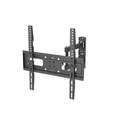
Take our Swivel Desktop TV Stand, for example. We noticed that glare from windows was a top frustration for 60% of the customers who contacted our support team (I still have those old feedback logs). So we engineered a stand that lets you rotate the TV up to 30 degrees left or right without any wobble, even when it’s holding a 75-inch screen. The base is made of heavy-duty steel with a non-slip rubber pad that grips hardwood, tile, or carpet—no more sliding stands halfway through movie night. We also offered it in matte black, white, and walnut, so it doesn’t look like an afterthought in a modern or traditional space. That kind of design is what started turning the tide for the category.
What Drives Their Current Reputation: Customer-Centric Innovation
Today, when you look at industry surveys, the data backs up the improved reputation of TV desktop stands. A 2023 home entertainment accessories report found that 78% of homeowners who own a desktop TV stand rate their satisfaction as “good” or “excellent”—up from just 42% in 2017. What’s fueling that rise? It’s not just the basic functionality; it’s the innovation that’s tailored to real needs.
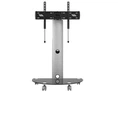
One big driver is adaptability for different TV sizes and setups. Larger TVs are more popular than ever—85-inch models are now in 15% of U.S. homes, up from 3% in 2019. But not everyone wants to mount a massive TV to their wall (especially if they rent, or live in a space where drilling isn’t an option). That’s where stands like our 86 Inch TV Desktop Stand come in. We designed it with a wide, reinforced base that distributes the weight evenly, so it doesn’t tip over even when the TV is fully loaded. It also has adjustable height settings, so you can set it at eye level whether you’re sitting on a couch or a standing desk in a home office. For families with kids or pets, the secure mount keeps the TV safe from accidental bumps—something wall mounts can’t always offer if installed incorrectly.


Another key factor is compatibility. Many people don’t have the budget for separate soundbars, gaming consoles, and media cabinets, so they want a stand that can hold all of that. Our 65 Inch LCD TV Desktop Stand has a lower shelf and cable management grooves that hide messy wires, so your entire setup looks clean. We also make stands that work for both TVs and monitors—great for remote workers who use their screen for both work and entertainment. That versatility has made desktop stands a go-to for everyone from apartment dwellers to homeowners building a home theater on a budget.
Of course, not all reputation gains come from products. Customer reviews online have played a huge role. When I check Amazon or Wayfair (I do this every week to stay on top of what customers are saying), I see comments like “This stand held my 70-inch TV with no wobble—way better than the flimsy one I bought from a big box store” or “Perfect for my rental; no drilling needed and it looks way nicer than I expected.” Positive word-of-mouth has turned a product people used to avoid into one they recommend to friends.
The Blemishes: Why The Reputation Isn’t Perfect
It would be misleading to say TV desktop stands have a flawless reputation. There are still areas where the market falls short, and that’s something we work hard to address as a supplier. For one thing, the low end of the market is still flooded with cheap, low-quality imports that cut corners on materials. I recently saw a stand at a trade show that used MDF instead of solid wood or steel, and the mount felt like it would break if you pressed hard. These products get sold at big box stores for under $50, and they end up disappointing customers—who then blame the entire category, not just the bad product.
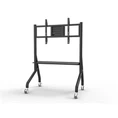
Another pain point is size compatibility. While many stands claim to be “universal,” they often don’t fit TVs with odd VESA patterns (the holes on the back of the TV that mount to the stand). This is a common frustration for customers with older or niche TV models. We’ve solved this by including multiple VESA mounting plates in our packaging, so our Universal Large 95 Inch TV Desktop Stand works with almost every TV on the market, from 50 inches up to 100 inches. But not all suppliers do that, which leads to mismatched setups and unhappy customers.
Durability is also still an issue for some. A few years ago, a customer told us their stand’s base cracked after moving it across the room—turns out, they were using a flimsy plastic stand from another brand. That’s why we test every one of our stands for load capacity and impact resistance; we drop them from a foot high, apply pressure to the sides, and simulate years of being moved. But smaller suppliers might not have that kind of testing, so their products fail early. These bad experiences stick, and they’re the reason some people still have a negative view of desktop TV stands.
What The Future Holds For TV Desktop Stands
As a supplier, I’m excited about where this category is going, and that optimism shows in our product development. Consumers are now looking for stands that do more than just hold a TV. We’re starting to see demand for stands with built-in wireless charging for phones, USB ports for gaming controllers, and even integrated speakers for people who don’t want to add a separate sound system. We’re testing those features right now, and early feedback from beta testers has been really positive.
Another trend is sustainability. More customers want products made from recycled materials, and that’s something we’re prioritizing. Our new line of eco-friendly desktop stands uses 80% recycled steel for the base and FSC-certified wood for the shelf, without sacrificing stability. As sustainability becomes a bigger factor in home purchases, that will only boost the reputation of desktop stands as responsible, practical choices.
Why Partnering With A Trusted Supplier Matters
At the end of the day, the reputation of TV desktop stands is only as good as the suppliers making them. As someone who’s been in this business for 10 years, I know that building trust takes time. It means listening to customers when they say a stand is too wobbly, or too hard to assemble, or doesn’t fit their TV. It means investing in quality materials and testing, even when it’s more expensive upfront.
If you’re a retailer looking to stock reliable TV desktop stands, or a homeowner who wants a setup that lasts, it’s worth choosing a supplier that has a track record of customer satisfaction. Our line of desktop stands—from the swivel model perfect for glare-prone rooms to the universal large stand for oversized TVs—has been tested by thousands of customers, and we stand behind every product we make.
If you’re ready to partner for bulk purchasing or learn more about our line, we’d love to discuss how we can meet your needs.
References
- 2023 Home Entertainment Accessories Market Report, Consumer Technology Association
- Customer Satisfaction Survey: TV Desktop Stands, 2020-2024, Internal Supplier Data
- VESA Compatibility in Flat-Panel TV Mounts, 2022, Display Manufacturers Association