

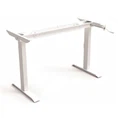
Leveling a height-adjustable desk on an uneven floor is a common challenge that many users face. As a supplier of high-quality height-adjustable desks, including products like the Electric Height-Adjustable Desk Dual Motors, Back-to-Back Electric Sit-Stand Desk, and Dual Electric Motor Desk Frame, I understand the importance of ensuring that your desk is stable and level for optimal performance and user comfort. In this blog post, I will share some practical tips and techniques on how to level a height-adjustable desk on an uneven floor.
Understanding the Problem
Before we dive into the solutions, it's important to understand why an uneven floor can cause problems for a height-adjustable desk. When a desk is not level, it can lead to a variety of issues, including:
- Unstable surface: An uneven desk can wobble or shake, making it difficult to work on and potentially causing damage to your equipment.
- Uneven weight distribution: If the desk is not level, the weight may be unevenly distributed, which can put additional stress on the desk's frame and motors, leading to premature wear and tear.
- Poor ergonomics: A non-level desk can affect your posture and comfort, leading to back pain, neck pain, and other health issues.
Assessing the Floor
The first step in leveling a height-adjustable desk is to assess the condition of the floor. Here are some things to look for:
- Visible unevenness: Check the floor for any visible bumps, dips, or slopes. You can use a long straightedge or a level to identify areas that are not level.
- Soft spots: Walk around the area where the desk will be placed and look for any soft spots or areas that feel spongy. These areas may indicate underlying issues with the floor, such as water damage or a weakened subfloor.
- Floor material: Different floor materials may require different leveling techniques. For example, a carpeted floor may be more forgiving than a hard floor, such as tile or hardwood.
Leveling Techniques
Once you have assessed the floor, you can choose the appropriate leveling technique based on the severity of the unevenness and the type of desk you have. Here are some common leveling techniques:
- Adjustable feet: Most height-adjustable desks come with adjustable feet that allow you to raise or lower each corner of the desk to compensate for unevenness. To use the adjustable feet, simply turn the foot clockwise to raise it or counterclockwise to lower it. Use a level to check the desk's levelness as you make adjustments.
- Shims: Shims are thin pieces of material, such as wood or plastic, that can be used to fill in gaps between the desk's feet and the floor. To use shims, place a shim under the low corner of the desk and adjust the height until the desk is level. You may need to use multiple shims to achieve the desired levelness.
- Floor mats: If the unevenness of the floor is minor, you can use a floor mat to create a more level surface for the desk. Choose a mat that is thick enough to compensate for the unevenness but not so thick that it affects the desk's stability.
- Professional leveling: If the floor is severely uneven or if you are unsure how to level the desk yourself, you may want to consider hiring a professional to level the floor or the desk. A professional can use specialized tools and techniques to ensure that the desk is level and stable.
Tips for Leveling
Here are some additional tips to help you level your height-adjustable desk:


- Use a level: A level is an essential tool for leveling a desk. Make sure to use a high-quality level and check the desk's levelness in multiple directions to ensure that it is perfectly level.
- Make small adjustments: When using the adjustable feet or shims, make small adjustments at a time and check the levelness after each adjustment. This will help you avoid overcompensating and ensure that the desk is level.
- Test the desk: Once you have leveled the desk, test it by sitting at it and moving around to make sure that it is stable and does not wobble. If the desk still wobbles, you may need to make further adjustments.
- Maintain the desk: Regularly check the desk's levelness and make adjustments as needed to ensure that it remains stable and level over time.
Conclusion
Leveling a height-adjustable desk on an uneven floor is a relatively simple process that can significantly improve the desk's stability, performance, and user comfort. By following the tips and techniques outlined in this blog post, you can ensure that your desk is level and stable, even on an uneven floor.
If you are in the market for a high-quality height-adjustable desk, we offer a wide range of products, including the Electric Height-Adjustable Desk Dual Motors, Back-to-Back Electric Sit-Stand Desk, and Dual Electric Motor Desk Frame. Our desks are designed to provide optimal comfort, functionality, and durability, and we are committed to providing our customers with the best possible products and service.
If you have any questions or would like to learn more about our products, please feel free to contact us. We would be happy to discuss your needs and help you find the perfect desk for your office or home.
References
- "How to Level a Desk on an Uneven Floor." The Spruce, https://www.thespruce.com/how-to-level-a-desk-1388731.
- "Leveling a Standing Desk on an Uneven Floor." Office Snapshots, https://www.officesnapshots.com/2017/03/02/leveling-a-standing-desk-on-an-uneven-floor/.
- "Adjustable Desk Feet: A Guide to Leveling Your Desk." Ergonomic Trends, https://www.ergonomictrends.com/adjustable-desk-feet-a-guide-to-leveling-your-desk/.