

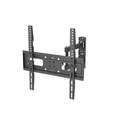
Determining whether your wall can support a tilt TV wall mount is a crucial step before installing your television. As a tilt TV wall mount supplier, I understand the importance of ensuring a safe and secure installation. In this blog post, I'll guide you through the process of assessing your wall's suitability for a tilt TV wall mount, so you can enjoy your TV without any worries.
Understanding the Basics of Wall Support
Before we dive into the specifics of wall assessment, it's important to understand the basic factors that determine whether a wall can support a tilt TV wall mount. The two primary factors are the type of wall and the weight capacity of the mount.
Wall Types
There are several types of walls commonly found in homes and commercial buildings, each with its own characteristics and load-bearing capabilities. The most common wall types include:
- Wood Stud Walls: These are the most common type of wall in residential construction. Wood studs provide a solid and stable base for mounting a TV wall mount. They are typically spaced 16 or 24 inches apart and can support a significant amount of weight.
- Concrete or Brick Walls: Concrete and brick walls are extremely strong and can support heavy loads. However, they require special tools and techniques for mounting, such as drilling into the wall and using concrete anchors.
- Drywall or Plaster Walls: Drywall and plaster walls are not as strong as wood stud or concrete walls and may require additional support when mounting a TV wall mount. They are typically made of a thin layer of gypsum board or plaster over a wooden frame.
Weight Capacity
The weight capacity of a tilt TV wall mount refers to the maximum weight that the mount can safely support. It's important to choose a mount with a weight capacity that exceeds the weight of your TV. Most tilt TV wall mounts have a weight capacity ranging from 50 to 300 pounds, depending on the size and type of the mount.
Assessing Your Wall
Now that you understand the basics of wall support, it's time to assess your wall to determine whether it can support a tilt TV wall mount. Here are the steps you can follow:
Step 1: Identify Your Wall Type
The first step is to identify the type of wall you have. You can do this by examining the wall surface or by checking the construction plans of your building. If you're unsure, you can consult a professional contractor or a building inspector.
Step 2: Locate the Wall Studs
Once you've identified your wall type, the next step is to locate the wall studs. Wall studs are vertical wooden or metal beams that provide support for the wall. They are typically spaced 16 or 24 inches apart and can be located using a stud finder.


Step 3: Check the Wall's Condition
Before mounting the TV wall mount, it's important to check the condition of the wall. Look for any signs of damage, such as cracks, holes, or water damage. If the wall is damaged, it may not be able to support the weight of the TV and the mount.
Step 4: Calculate the Weight of Your TV
To determine the weight capacity of the mount you need, you'll need to calculate the weight of your TV. You can find the weight of your TV in the owner's manual or by searching for the model online. Make sure to include the weight of any additional accessories, such as a soundbar or a gaming console.
Step 5: Choose the Right Mount
Based on the weight of your TV and the type of wall you have, choose a tilt TV wall mount with a weight capacity that exceeds the weight of your TV. Make sure to choose a mount that is compatible with your TV's VESA pattern, which is a standard measurement for the mounting holes on the back of the TV.
Types of Tilt TV Wall Mounts
There are several types of tilt TV wall mounts available on the market, each with its own features and benefits. Here are some of the most common types:
- Fixed Tilt TV Wall Mounts: These mounts allow you to tilt the TV up or down at a fixed angle. They are a popular choice for mounting TVs in a specific viewing position.
- Full-Motion Tilt TV Wall Mounts: These mounts allow you to tilt the TV up or down, as well as swivel it left or right. They are a great choice for mounting TVs in a room where you need to adjust the viewing angle frequently.
- Low-Profile Tilt TV Wall Mounts: These mounts are designed to mount the TV close to the wall, giving it a sleek and modern look. They are a popular choice for mounting TVs in small spaces.
Recommended Tilt TV Wall Mounts
As a tilt TV wall mount supplier, I recommend the following products:
- Best TV Wall Mount Tilt 37 To 70: This mount is suitable for TVs ranging from 37 to 70 inches and has a weight capacity of up to 132 pounds. It features a tilt angle of up to 15 degrees and is easy to install.
- Classical Tilt TV Mount 65 Inch: This mount is designed for 65-inch TVs and has a weight capacity of up to 110 pounds. It features a tilt angle of up to 12 degrees and is made of high-quality materials for durability.
- 100 Inch Heavy Duty TV Wall Brackets: This mount is suitable for large TVs up to 100 inches and has a weight capacity of up to 330 pounds. It features a tilt angle of up to 15 degrees and is designed for heavy-duty use.
Contact Us for Procurement
If you're interested in purchasing a tilt TV wall mount, please feel free to contact us for procurement. We offer a wide range of high-quality tilt TV wall mounts at competitive prices. Our team of experts can help you choose the right mount for your needs and provide you with installation instructions.
References
- Home Improvement Encyclopedia. (n.d.). Wall Mounting Basics. Retrieved from [Publisher's Name]
- DIY Network. (n.d.). How to Mount a TV on the Wall. Retrieved from [Publisher's Name]
- Consumer Reports. (n.d.). TV Wall Mounts: How to Choose the Right One. Retrieved from [Publisher's Name]