

Do shock - absorbing speaker wall mounts improve sound quality?
As a supplier of speaker wall mounts, I've been asked this question countless times: Do shock - absorbing speaker wall mounts improve sound quality? In this blog, I'll delve into the science behind it, examine the factors at play, and share some real - world insights.
The Basics of Sound Propagation
Before we can understand how shock - absorbing mounts might affect sound quality, it's essential to grasp the fundamentals of sound propagation. Sound is a mechanical wave that travels through a medium, usually air. When a speaker produces sound, it vibrates the air molecules around it, creating a series of compressions and rarefactions that our ears perceive as sound.
However, speakers don't just vibrate the air; they also vibrate the surface they're mounted on. If a speaker is directly attached to a wall or a stand, these vibrations can be transferred to the mounting surface. This can lead to several issues. For example, the wall or stand might start to resonate at certain frequencies, creating unwanted vibrations that can interfere with the original sound produced by the speaker.
How Shock - Absorbing Mounts Work
Shock - absorbing speaker wall mounts are designed to minimize the transfer of vibrations from the speaker to the mounting surface. They typically use materials with high damping properties, such as rubber or foam, to absorb and dissipate the energy of the vibrations.
When a speaker vibrates, the shock - absorbing material in the mount compresses and expands, converting the mechanical energy of the vibrations into heat energy. This process reduces the amount of vibration that is transferred to the wall or stand, effectively isolating the speaker from its mounting surface.
Impact on Sound Quality
The main way shock - absorbing mounts can improve sound quality is by reducing unwanted resonances and vibrations. When a speaker is mounted on a rigid surface without proper isolation, the surface can resonate at frequencies that are close to the frequencies produced by the speaker. These resonances can cause coloration of the sound, making it sound muddy or boomy.
By using shock - absorbing mounts, we can eliminate or significantly reduce these resonances. This allows the speaker to produce a cleaner, more accurate sound. The bass frequencies, in particular, can benefit from shock - absorbing mounts. Without proper isolation, the low - frequency vibrations from the speaker can cause the wall to vibrate, creating a "one - note" bass sound. With shock - absorbing mounts, the bass becomes tighter and more defined.
Another aspect is the imaging and soundstage. When a speaker is isolated from its mounting surface, it can project a more precise soundstage. The sound appears to come from a specific point in space, rather than being scattered due to the vibrations of the mounting surface. This can enhance the overall listening experience, making it more immersive.
Real - World Examples
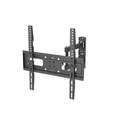
I've had many customers who have reported significant improvements in sound quality after switching to shock - absorbing speaker wall mounts. For instance, a home theater enthusiast who was struggling with a muddled sound in his living room installed our Swivel Speaker Wall Mount with Tilt 15 Degree. He was amazed at how much clearer the dialogue became and how the bass tightened up.
In a professional recording studio, a sound engineer replaced the standard mounts with our Swivel Tilt Speaker Wall Mount. The studio was experiencing some unwanted room resonances that were affecting the accuracy of the recordings. After the installation of the shock - absorbing mounts, the engineer noticed a significant reduction in these resonances, allowing for more precise monitoring and better - quality recordings.
Other Considerations
While shock - absorbing mounts can improve sound quality, they are not a magic solution. Other factors also play a crucial role in determining the overall sound quality of a speaker system.
The quality of the speaker itself is of utmost importance. A low - quality speaker will not suddenly sound amazing just because it's mounted on a shock - absorbing mount. The room acoustics also matter. Even with the best shock - absorbing mounts, a room with poor acoustics, such as a room with hard, reflective surfaces, will still have issues with sound quality.
The placement of the speakers is another factor. The angle and height at which the speakers are mounted can affect the soundstage and imaging. Our Swivel Speaker Wall Mount with Tilt 30 Degree allows for precise adjustment of the speaker's position, which can be combined with the shock - absorbing benefits to optimize the sound quality.
Conclusion
In conclusion, shock - absorbing speaker wall mounts can indeed improve sound quality. By reducing unwanted resonances and vibrations, they allow the speaker to produce a cleaner, more accurate sound. The bass becomes tighter, the imaging is more precise, and the overall listening experience is enhanced.
However, it's important to remember that they are just one part of the equation. To achieve the best sound quality, you need to consider the quality of the speakers, the room acoustics, and the proper placement of the speakers.
If you're looking to enhance the sound quality of your speaker system, I encourage you to consider our range of shock - absorbing speaker wall mounts. We have a variety of options to suit different speaker sizes and requirements. Whether you're a home theater enthusiast, a professional audio engineer, or a business owner looking to improve the audio in your space, we can provide the right solution for you.
If you're interested in learning more about our products or would like to discuss your specific needs, please feel free to reach out. We're always happy to help you find the best speaker wall mounts for your situation and guide you through the purchasing process.


References
- Beranek, Leo L. "Acoustics." American Institute of Physics, 1986.
- Toole, Floyd E. "Sound Reproduction: The Acoustics and Psychoacoustics of Loudspeakers and Rooms." Focal Press, 2018.
- Everest, F. Alton. "Master Handbook of Acoustics." McGraw - Hill Education, 2001.